What is Universal Design?
September 22, 2025
Universal Design (often abbreviated as UD) is more than just a trend in architecture and product development, it’s a philosophy that redefines how we build, create, and innovate. At its core, Universal Design is about creating environments, products, and systems that are usable and accessible for as many people as possible, regardless of age, ability, or disability. Instead of focusing solely on compliance or minimal accessibility standards, Universal Design seeks to remove barriers, promote inclusivity, and make life easier and more beautiful for everyone.
Let’s explore the principles of Universal Design, its applications in architecture, technology, and product development, and why this approach benefits all of society, not just people with disabilities.
What is Universal Design?
The concept of Universal Design emerged in 1997 and quickly gained traction across industries. Unlike ADA (Americans with Disabilities Act) compliance or traditional “accessible design,” UD goes beyond minimum requirements. Instead of designing for only one group of people, UD considers the needs of everyone.
Think of it this way: while ADA sets the legal baseline for accessibility, Universal Design focuses on making design seamless, intuitive, and aesthetically pleasing for people of all abilities. It removes the stigma often associated with “special” accommodations by blending functionality and beauty into a single, thoughtful solution.
For example, a curb-less shower doesn’t just help wheelchair users, it makes life easier for parents bathing children, older adults with balance challenges, and even athletes recovering from injuries. These concepts benefit everyone, not just those with disabilities.
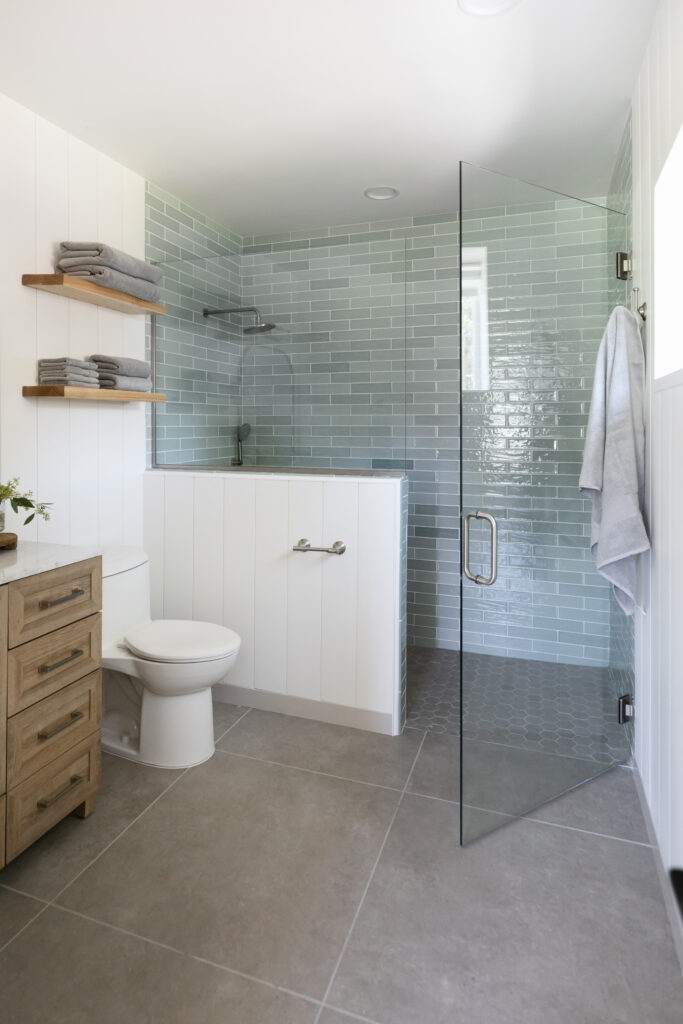
The Seven Principles of Universal Design
To guide designers, architects, and innovators, Universal Design follows seven core principles. Each ensures that usability, safety, and aesthetics are prioritized.
1. Equitable Use
Designs must be useful and marketable to people with diverse abilities.
- Example: Curb-less building entries or ramps integrated seamlessly into landscaping, rather than hidden or secondary entrances.
2. Flexibility in Use
A design should accommodate a wide range of individual preferences and abilities.
- Example: Offering both paper and digital forms for applications or check-ins.
3. Simple and Intuitive Use
Products and spaces should be easy to understand, regardless of a user’s experience or cognitive ability.
- Example: Automatic doors that open without requiring strength, timing, or fine motor skills.
4. Perceivable Information
Important information must be communicated effectively, regardless of sensory ability.
- Example: Signage that includes large, high-contrast fonts, braille, and pictograms.
5. Tolerance for Error
Designs should minimize hazards and adverse consequences of accidental or unintended actions.
- Example: Elevators equipped with backup systems and emergency call features.
6. Low Physical Effort
A design should be usable with minimal fatigue or physical exertion.
- Example: Touchless faucets, voice-controlled smart devices, or water fountains positioned at seated height.
7. Size and Space for Approach and Use
Adequate space should be provided for comfort, mobility, and usability.
- Example: Public restrooms with a five-foot turning radius, wider doorways, and sinks that are accessible to everyone.
These principles apply across industries and serve as a checklist for inclusive, future-forward design.
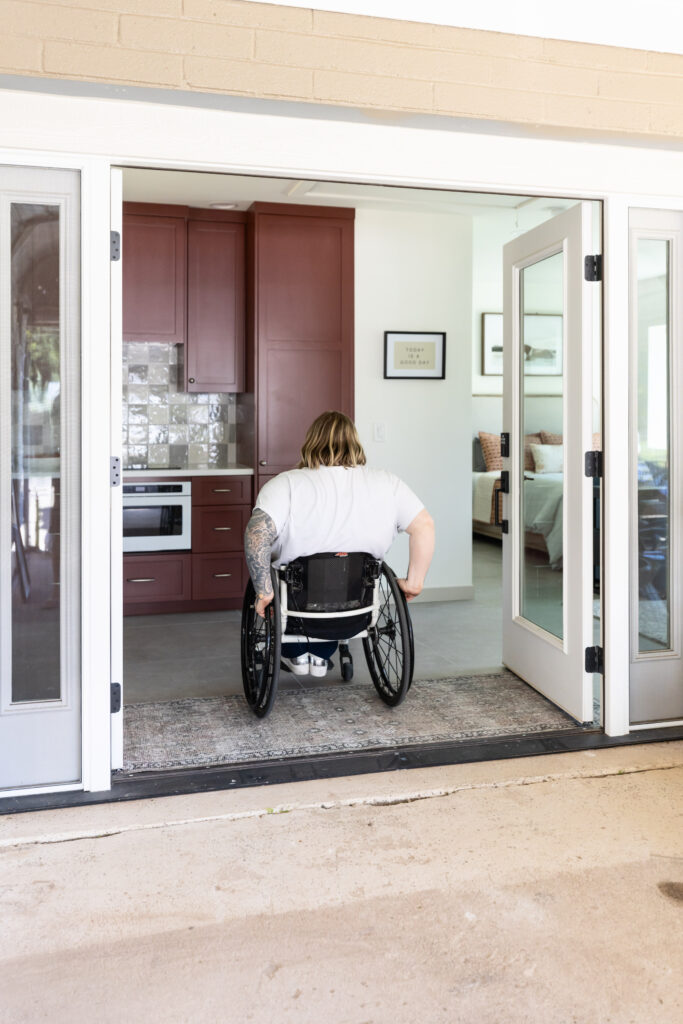
Universal Design vs. ADA Design: What’s the Difference?
It’s easy to confuse Universal Design with ADA compliance. While both aim to make spaces usable for people with disabilities, their approaches differ:
- Accessibility/ADA Design → Meets legal requirements for access. Often seen as a checklist.
- Universal Design → Goes beyond compliance to consider usability, aesthetics, and inclusivity for all people, regardless of ability.
Think of accessibility as the starting point, and Universal Design as the elevated goal.
Universal Design in Action
Architecture
Universal Design in architecture is changing how we think about homes, offices, and public spaces. Features like no-step entries, wide hallways, lever-style door handles, and multi-height countertops are not only functional but also stylish. More designers are embracing sensory-friendly design elements such as acoustic treatments and natural lighting to create calm, inclusive spaces.
Products
From smartphones to kitchen appliances, Universal Design principles are everywhere. Apple’s voice commands and accessibility settings, for example, are used by millions of people, most of whom don’t identify as disabled. Similarly, OXO’s Good Grips kitchen tools were originally designed for people with arthritis but became wildly popular because they are simply easier and more comfortable for everyone to use.
Technology
In the digital space, Universal Design has sparked huge changes in web and app development. Screen reader compatibility, closed captioning, high-contrast design options, and adaptable interfaces make online spaces usable for more people. Voice assistants like Alexa and Siri are great examples of UD technology that has moved into mainstream use.
Why Universal Design Matters
It is not about creating a “one-size-fits-all” solution. Instead, it provides multiple ways for people to access and engage with spaces and products. This flexibility ensures inclusivity without sacrificing beauty or usability.
The benefits ripple out beyond people with disabilities:
- Parents with strollers appreciate ramps.
- Older adults value lever handles that don’t strain arthritic joints.
- Travelers with luggage benefit from escalators and elevators.
- Busy professionals love voice-to-text dictation and touchless controls.
When design works well for people with disabilities, it works better for everyone.
Challenges to Universal Design
Despite its benefits, UD faces challenges:
- Cost Concerns: Some businesses perceive UD features as expensive to implement, though many solutions are cost-neutral when integrated early in the design process.
- Awareness Gaps: Not all architects, designers, or developers are educated on UD principles.
- Legislative Limitations: While ADA and similar laws mandate accessibility, Universal Design remains voluntary.
Overcoming these challenges requires continued advocacy, education, and the recognition that inclusive design is not just a “nice to have” but an essential part of modern living.
The Future of Universal Design
As the global population ages and disability awareness grows, UD will only become more relevant. Countries and organizations are beginning to adopt UD principles into housing codes, public infrastructure, and product design.
With technology advancing rapidly (think AI-powered accessibility tools, smart homes, and personalized digital interfaces) the potential for these functions to transform daily life is enormous. By blending aesthetics, functionality, and inclusivity, we can build a world where everyone feels welcome and empowered.
Final Thoughts: Good Design is Universal
Good accessible design is not just about ramps and grab bars. It’s about creating beautiful, intuitive, and inclusive solutions that enhance everyday life for all people. Whether through architecture, technology, or product development, Universal Design principles push us to think beyond compliance and toward compassion, creativity, and equality.
When we embrace Universal Design, we don’t just improve access—we elevate experiences. And when one group benefits, all of society benefits. That’s the true power of accessibility: a world where every person, regardless of ability, has the opportunity to participate fully and beautifully.
Comments Off on What is Universal Design?